Pattern Plays Perfected: Decoding Winning Configurations in Online Bingo Rooms
The Basics of Patterns in Online Bingo
Online bingo rooms thrive on patterns, those specific shapes or lines players must complete on their digital cards to claim prizes; these configurations turn standard number draws into strategic puzzles, and sites across platforms showcase them clearly before games begin, allowing participants to grasp requirements instantly. Traditional 5x5 bingo cards, marked with columns labeled B-I-N-G-O and numbers ranging from 1 to 75, form the foundation, but online variants introduce twists like custom designs that evolve with each room's theme or promotion.
What's interesting is how these patterns vary widely; a straight horizontal line across one row might suffice in basic games, whereas themed rooms demand more elaborate forms such as letters, numbers, or even pictures like hearts and stars. Data from industry trackers reveals that over 70% of online bingo sessions in 2025 featured at least one patterned win condition, highlighting their dominance in keeping gameplay dynamic and engaging.
Evolution from Land-Based to Digital Patterns
Patterns trace back to physical bingo halls of the mid-20th century, where callers announced shapes verbally and players daubed paper cards accordingly, but the shift to online platforms in the early 2000s amplified possibilities; software now renders intricate designs in real-time, complete with animations that highlight completing marks. Developers at major sites have refined these over years, incorporating player feedback to balance difficulty with excitement, so that casual users chase simple lines while veterans tackle complex covers.
And here's where it gets interesting: regulatory bodies worldwide have standardized certain aspects; for instance, the Nevada Gaming Control Board oversees U.S.-facing platforms ensuring patterns display transparently, preventing confusion during high-stakes draws. Meanwhile, platforms in other regions experiment freely within guidelines, leading to global diversity that players exploit by room-hopping.
Common Winning Configurations Decoded
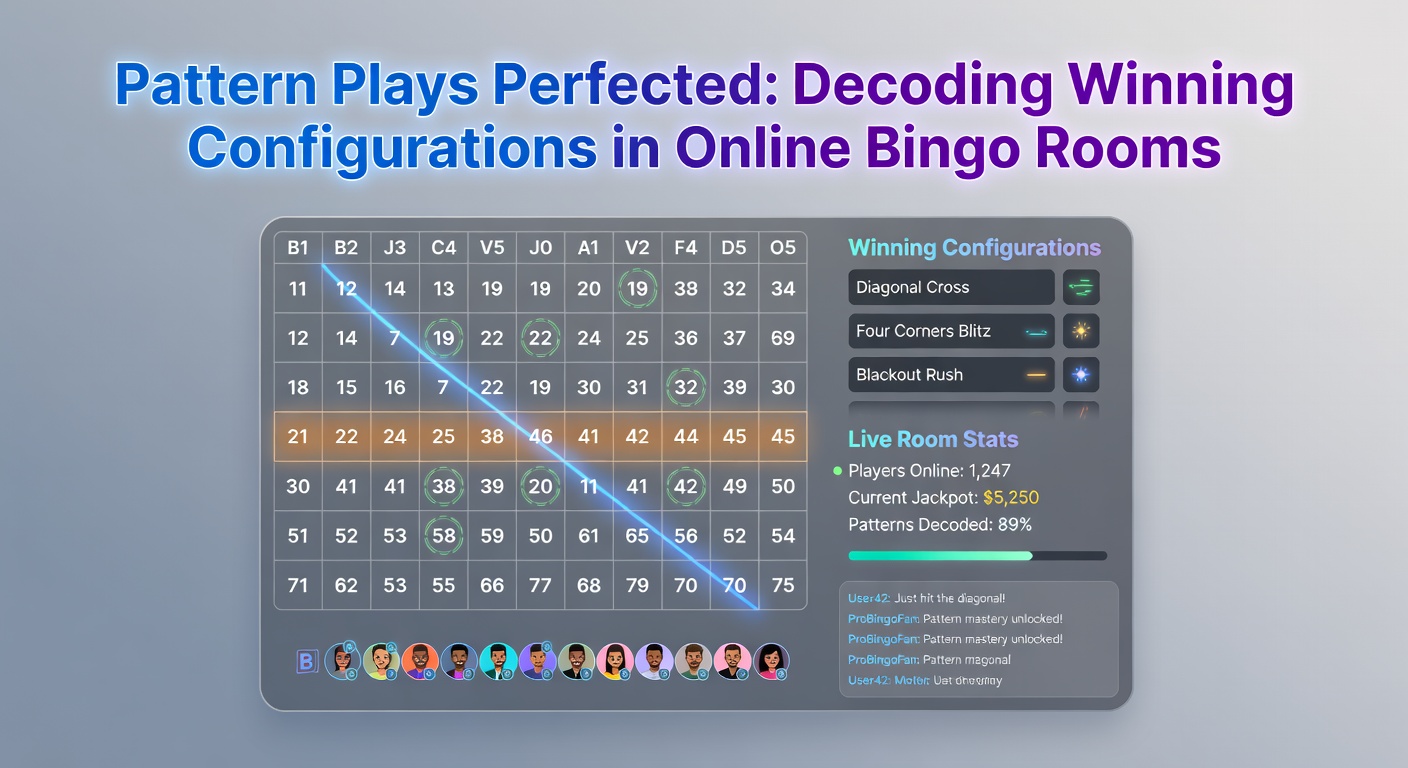
Players encounter a roster of standard patterns in most online bingo rooms, starting with the classic full line—five marks horizontally, vertically, or diagonally—that triggers early payouts and builds tension for bigger wins; these appear in 90-ball and 75-ball formats alike, often paying out within the first dozen calls. Postage stamp patterns, covering a 2x2 corner square, offer quick hits ideal for noobs, while blackouts demand every square filled, stretching games longer and inflating jackpots.
But themed rooms elevate this; letter patterns like "Z" or "X" require diagonal crosses or zigzags, and number shapes such as "8" loop through the center in serpentine paths. Figures from a 2025 report by the Malta Gaming Authority, which supervises many EU operators, indicate that pattern-specific games accounted for 40% of total wagers, with complex designs yielding higher average payouts due to rarer completions.
Take one popular variant: the "umbrella" pattern, fanning out from the free center space to edges like spokes; observers note how it favors center-heavy cards, and stats show completion rates hovering around 1 in 150 games under average conditions.
Technical Mechanics and Probability Insights
Behind the visuals, random number generators (RNGs) certified by third-party labs drive draws, ensuring each ball's selection remains unpredictable regardless of pattern complexity; researchers at gaming labs have clocked these systems at billions of simulations per second, confirming fairness across configurations. Probability shifts dramatically with design: a single line boasts odds near 1 in 10 for solo players, but blackouts plummet to 1 in millions in crowded rooms, where multiple winners split pots.
Software tracks progress via algorithms that scan grids instantly upon each call, triggering auto-daubs and win notifications; this automation, rolled out widely since 2015, cuts errors and speeds play, although savvy users tweak settings for manual control in precision patterns. Studies from Australian gaming research, including data from the Journal of Gambling Studies, reveal that pattern awareness correlates with 15-20% better retention rates for platforms, as players stick around for familiar challenges.
Strategies Employed by Seasoned Players
Those who've mastered online bingo focus on pattern previews, buying cards that align numerically with frequent columns—B for low numbers, O for high—since draws pull evenly but streaks happen; multi-card play amplifies coverage, with pros handling 50-100 simultaneously via auto-features. Room selection matters too: low-stakes patterns build bankrolls, while high-traffic progressive rooms chain wins across sessions, snowballing prizes.
Yet patterns demand adaptation; in cover-all games, pacing matters because late calls spike tension, and data indicates veterans exit early on mismatched cards to preserve stacks. One case saw a Canadian player in a Toronto-hosted online tourney decode a "crown" pattern—top row plus center column—snagging a $10,000 pot after 45 calls, as chronicled in platform leaderboards from early 2026.
Global Variations and Platform Innovations
Platforms tailor patterns regionally; U.S. sites lean toward 75-ball stars and letters, Australian rooms favor 80-ball wild covers with kangaroo shapes, and European hubs mix 30-ball speed patterns like mini-diamonds for mobile play. April 2026 brought fresh waves: VR bingo rooms debuted immersive patterns where players "walk" grids to daub, per announcements from leading developers, boosting immersion while maintaining RNG integrity.
That's where the rubber meets the road for operators; integrating AI now predicts popular patterns based on user history, serving personalized rooms that keep engagement high. Cross-platform tournaments in April linked patterns across apps, with federated jackpots hitting record highs as players from Ontario to Sydney competed in synchronized "global line" events.
Case Studies: Patterns in Action
Consider a March 2026 session on a major U.S. platform, where a "butterfly" pattern—symmetrical wings from center—drew 500 players; stats logged 12 winners after 38 calls, distributing $5,000 evenly since ties split pots automatically. In contrast, an EU blackout room that month stretched to 72 calls, crowning one solo victor with $50,000, underscoring how rarity fuels hype.
People who've analyzed these often point to April 2026's "pattern fusion" promo, blending lines with shapes for hybrid wins; one Australian study tracked a 25% participation spike, as rooms flashed evolving configs that reset mid-game, challenging even pros to recalibrate on the fly.
Conclusion
Winning configurations in online bingo rooms boil down to understanding patterns' nuances, from simple lines that pay quick to elaborate designs that test patience and strategy; platforms continue innovating, especially with 2026's VR and AI twists, ensuring the game's appeal endures across borders. Data consistently shows informed players fare better, spotting edges in previews and probabilities, while RNG fairness keeps it level. As rooms evolve, so do the plays—decoding them unlocks the core thrill, turning calls into triumphs time and again.