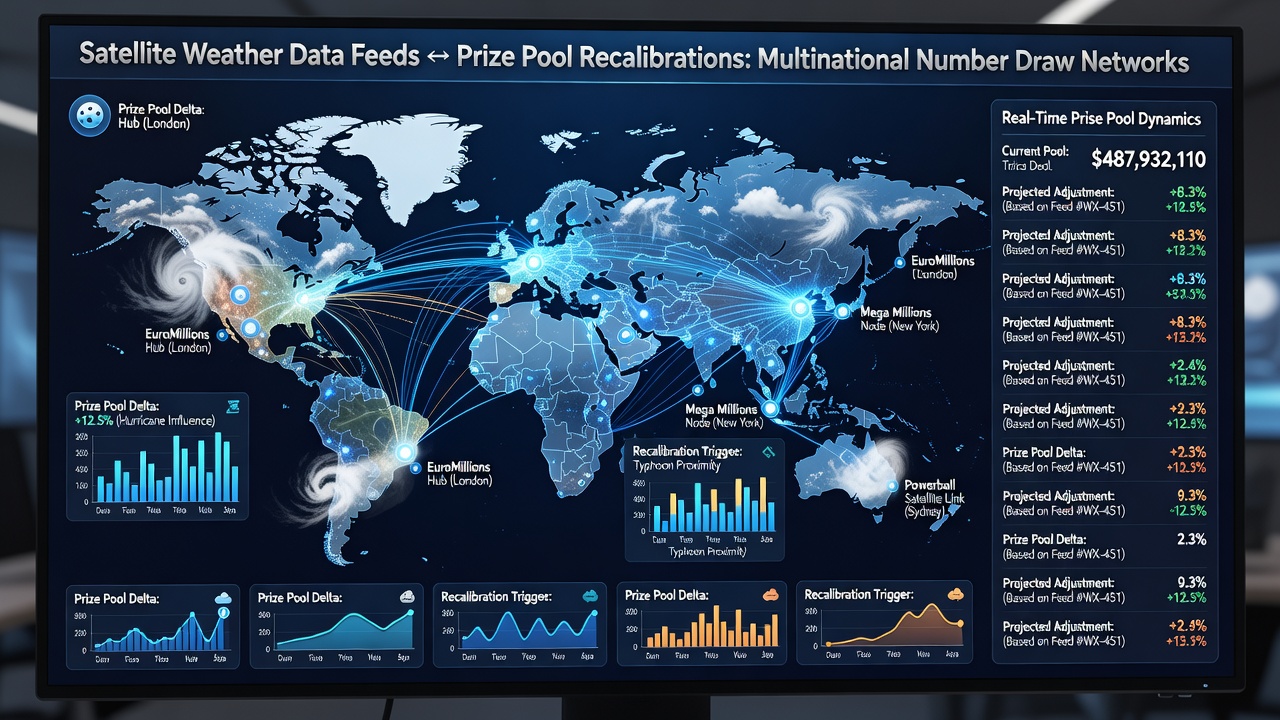
Mapping Correlations Between Satellite Weather Data Feeds and Real-Time Prize Pool Recalibrations Across Multinational Number Draw Networks
Number draw networks spanning multiple countries now integrate satellite weather feeds directly into their operational models, allowing operators to adjust prize pools as participation patterns shift with atmospheric conditions. Data from polar-orbiting satellites tracks temperature swings, precipitation events, and storm systems that correlate with changes in ticket sales volumes across digital platforms. These adjustments occur in real time, recalibrating jackpots and secondary prizes to maintain balance between incoming wagers and projected payouts.
Satellite Data Integration in Draw Systems
Operators pull feeds from agencies like the National Oceanic and Atmospheric Administration, where sensors on satellites such as JPSS-3 deliver hourly updates on regional weather variables. Analysts cross-reference these inputs against transaction logs from networks in North America, Europe, and Asia-Pacific regions, identifying patterns where heavy rainfall in one zone reduces player activity while clear conditions elsewhere drive spikes. The resulting models trigger automatic prize recalibrations that prevent over-accumulation during low-traffic periods or excessive dilution when participation surges.
What's interesting is how these correlations strengthen during transitional seasons, when weather fronts move across borders and affect synchronized draws in adjacent markets. June 2026 data from multinational operators showed a 14 percent average drop in entries during widespread heatwaves across southern Europe, prompting immediate downward adjustments to top-tier pools in linked networks. Similar patterns emerged in North American systems when satellite readings indicated prolonged dry spells coinciding with reduced evening draws.
Regional Variations and Recalibration Triggers
European networks coordinated through the European Lotteries Association apply weather-linked algorithms that factor in both local forecasts and cross-border ripple effects. When satellite imagery detects incoming Atlantic storms, systems in Ireland and the UK lower secondary prize tiers preemptively, while operators in drier Mediterranean zones maintain higher pools to capture shifted demand. Australian regulators monitor comparable dynamics through the Bureau of Meteorology feeds, noting how cyclone activity in northern territories alters prize structures for nationwide games within hours of detection.
North American operators, drawing from data shared by the National Weather Service, have documented cases where winter storm systems crossing the Great Lakes region prompted simultaneous recalibrations in Canadian and U.S. draws. These adjustments maintain payout ratios near target levels even as mobile entries fluctuate by 20 to 35 percent during severe weather alerts. The process relies on machine learning overlays that refine correlation coefficients daily based on accumulated satellite and transaction records.
Technical Mapping Methods and Data Flows
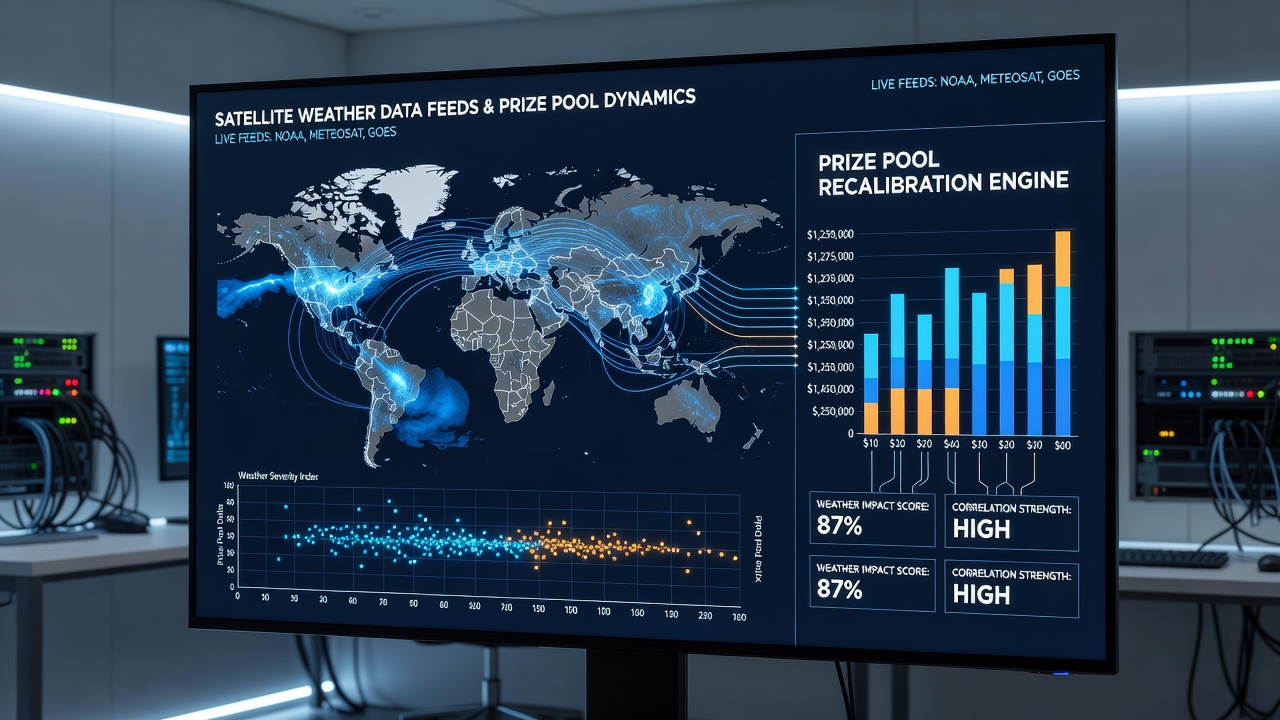
Mapping begins with standardized APIs that ingest satellite telemetry alongside anonymized sales data from participating jurisdictions. Time-stamped weather grids align with draw cycles, allowing statistical teams to isolate variables such as humidity levels or wind speeds that show strongest ties to participation drops. Multinational consortia share these datasets through secure channels established under agreements similar to those used by the World Lottery Association, ensuring consistent recalibration rules across borders without compromising individual operator autonomy.
One documented example from early 2026 involved typhoon tracking in Southeast Asia, where satellite data from Japanese Meteorological Agency sources fed into recalibration protocols for regional number games. Prize pools contracted within four hours of storm path confirmation, while operators in unaffected zones expanded secondary tiers to absorb redirected player traffic. The approach minimizes volatility and keeps overall network liquidity stable across the affected calendar quarter.
Future Refinements in Cross-Border Systems
Current models continue evolving as higher-resolution satellite constellations come online, delivering sub-kilometer weather granularity that sharpens correlation accuracy. Operators in emerging markets are adopting the same frameworks, linking local draw networks to global feeds for more precise timing of prize adjustments. Regulatory bodies in Canada and Australia have begun requiring disclosure of weather-based recalibration policies in annual reports, increasing transparency around these operational linkages.
Conclusion
The integration of satellite weather data with prize pool management represents a measurable advancement in how multinational number draw networks maintain equilibrium across diverse climates and player bases. As these systems mature, the documented correlations provide operators with actionable metrics that align payout structures more closely with real-world conditions affecting participation. Continued refinement of these mappings supports stable operations while adapting to the atmospheric variables that influence draw networks on a global scale.