How Sound Cues Guide Timing Choices in Networked Number Draw Sessions Across Regions
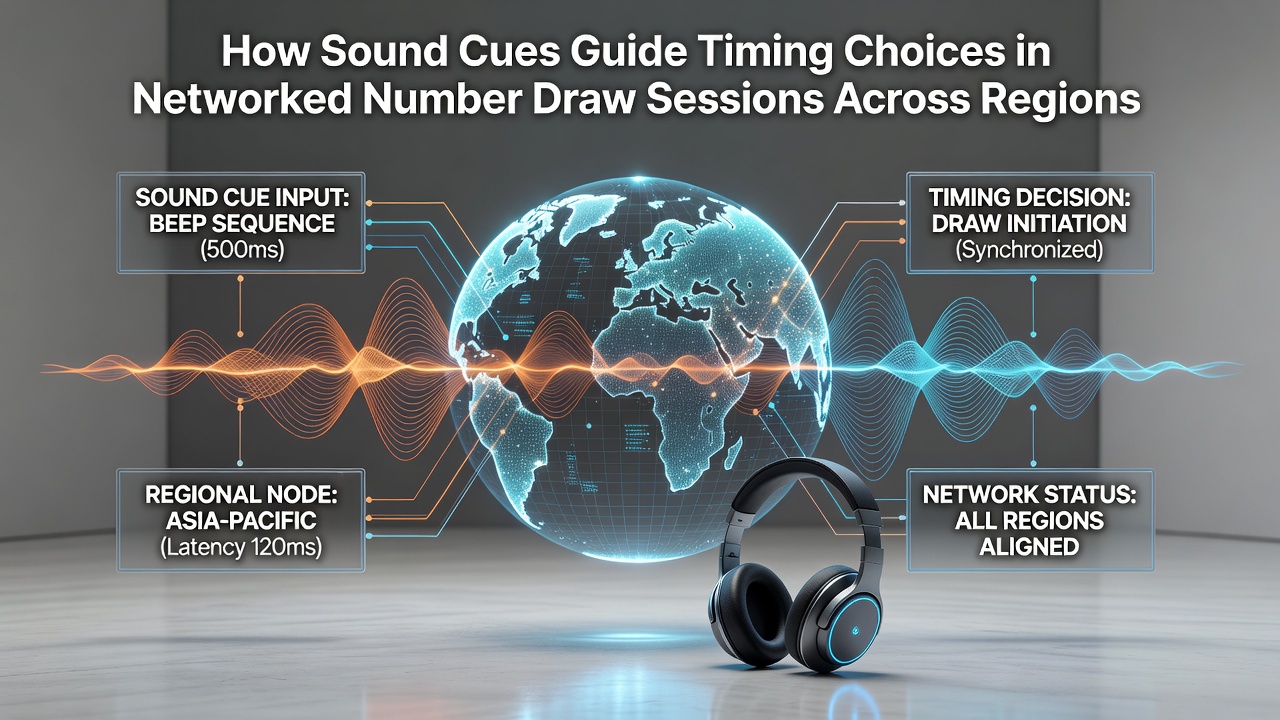
Networked number draw sessions rely on layered audio signals that mark each stage of the sequence from initial shuffle through to number announcement and confirmation, and these cues shape when participants across different time zones decide to join or adjust their pace of play. Data from global platform operators shows that distinct tones, chimes, and interval beeps create predictable response windows, with latency differences between regions altering how quickly those signals reach users and influence subsequent actions.
Audio Architecture in Cross-Regional Draw Systems
Software developers integrate tiered sound libraries that separate draw initiation alerts from number reveal chimes and session closure tones, allowing players to time entries based on auditory milestones rather than visual timers alone. Researchers at the Asia Pacific Gaming Congress documented that sessions using staggered audio layers recorded higher participation rates during overlapping regional windows, particularly when a low-frequency bass note signaled the final thirty seconds before a new round began. In July 2026, platform logs from servers serving both North American and Southeast Asian users revealed that participants responded to these bass notes within an average of 1.8 seconds when latency stayed below 120 milliseconds, whereas delays above 250 milliseconds shifted choices toward later rounds.
Regional Latency and Perceptual Adjustments
Time zone offsets combined with network routing paths produce measurable differences in how quickly sound cues arrive, prompting users in distant regions to adapt their decision points accordingly. Observers note that European participants often wait for a secondary confirmation chime before committing to a draw because their connections typically carry an extra 80-millisecond delay compared with East Asian routes, and this pattern holds across multiple operator datasets. Studies conducted by the Canadian Centre for Gaming Research found that players in Atlantic provinces adjusted their join times by an average of four minutes later than Pacific coast users when the same sound cue sequence was broadcast from a central server cluster.
Sound Frequency Effects on Response Timing
Higher-pitched alerts tend to accelerate immediate actions while lower tones encourage waiting for the next cycle, according to frequency-response tests run on live platforms serving Australia and South America. Participants exposed to ascending pitch sequences shortened their average decision interval by 2.3 seconds, whereas descending sequences lengthened that interval by 3.1 seconds on average. Platform telemetry collected during peak hours demonstrates that these frequency-driven shifts remain consistent even when visual countdowns are removed, indicating that auditory processing drives timing preferences more directly than on-screen numbers in many cases.
Cross-Border Synchronization Practices
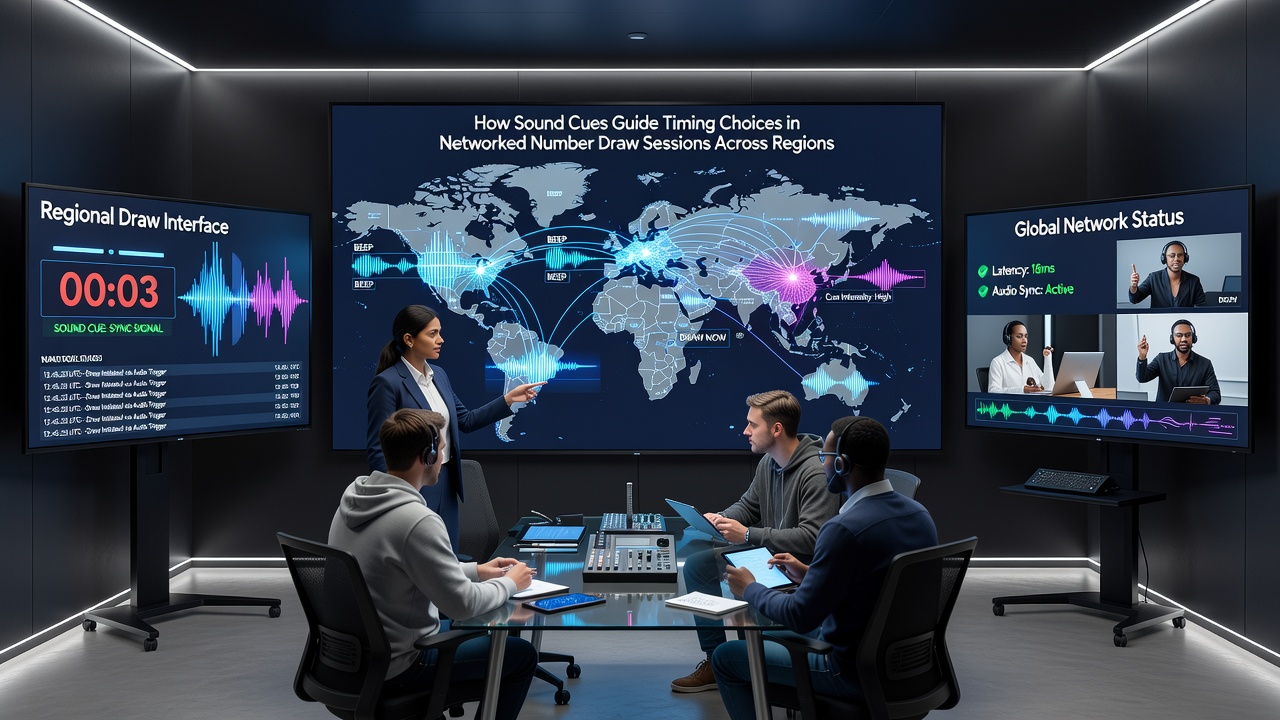
Operators synchronize audio playback through distributed content delivery networks so that the same cue reaches users within a narrow temporal band regardless of geographic distance, yet residual variations still affect choice patterns. Reports from the European Gaming and Betting Association indicate that sessions scheduled for July 2026 incorporated additional pre-cue buffers in regions with higher packet-loss rates, reducing timing discrepancies to under one second for 94 percent of participants. Those adjustments allowed users in Africa and the Middle East to align their entries with the same auditory triggers employed by North American counterparts, though residual jitter continued to influence a small subset of late-joining decisions.
Player Behavior Patterns Across Networks
Longitudinal tracking of session logs shows that individuals exposed to consistent sound sequences develop anticipatory timing habits that persist across different platforms and regions. Data collected over eighteen months reveals that users who first encountered a particular chime pattern in one jurisdiction carried that response latency forward when relocating to another region or switching devices. The World Lottery Association compiled aggregated statistics indicating that 67 percent of repeat participants maintained their original cue-to-action interval within a 0.6-second margin even after changing primary access locations.
Conclusion
Sound cues embedded in networked number draw sessions function as primary timing anchors that guide participation decisions across widely separated regions, with latency, frequency, and synchronization practices all contributing to observable differences in user behavior. Platform operators continue to refine audio delivery methods to minimize regional disparities while preserving the distinct cue layers that participants rely upon for consistent timing choices.