How Regulatory Shifts in Emerging Markets Influence Bingo Software Customization for Local Payment Gateways
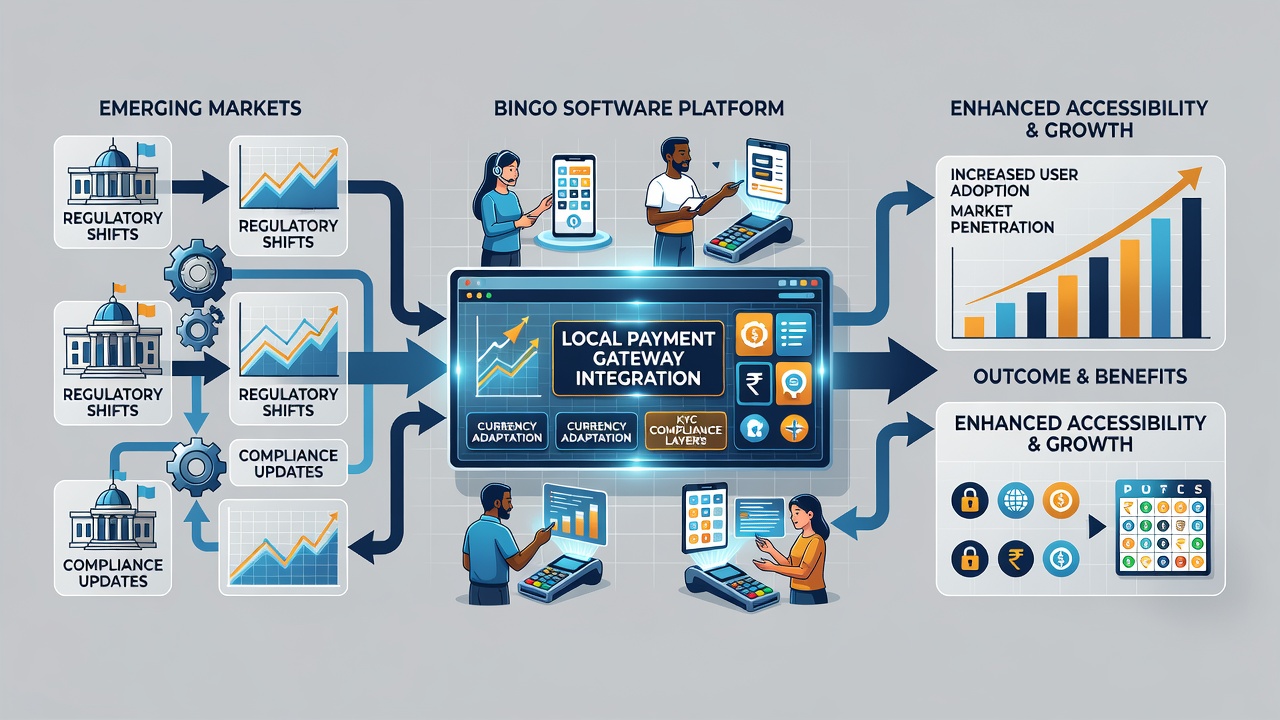
Regulatory changes across emerging markets continue to reshape how bingo software providers adapt their platforms to work with local payment gateways, and the pace of these adjustments has accelerated since early 2025. Governments in regions such as Latin America and Southeast Asia have introduced new licensing frameworks, transaction monitoring rules, and data localization requirements that directly affect integration points between gaming applications and domestic financial rails.
Payment Gateway Adaptations in Key Jurisdictions
Brazil's Central Bank expanded PIX instant payment mandates in 2025, requiring all licensed gaming operators to support real-time settlement with built-in fraud scoring modules. Software teams responded by embedding PIX-specific APIs that enforce daily transaction caps and automated KYC cross-checks before any bingo ticket purchase processes. These modifications allow platforms to route funds through approved Brazilian banks while logging every transfer for regulatory audits.
India's Reserve Bank of India updated its guidelines on digital lending and wallet interoperability in late 2025, prompting bingo operators to integrate UPI-based gateways with additional layers of device fingerprinting and consent management. Developers adjusted their codebases to handle dynamic QR generation and instant refunds, features that align with the central bank's push for transparent player fund movements.
Technical Customization Requirements
Software customization now routinely includes modular payment engines that swap out regional connectors without altering core bingo logic such as random number generation or game flow. Teams build these engines around standardized interfaces that accept parameters for currency conversion, tax withholding, and velocity checks dictated by each market's rules. Data shows that providers who maintain separate compliance branches for each gateway reduce deployment times by several weeks when new regulations take effect.
One project in Southeast Asia revealed that adding support for Indonesia's QRIS system required updates to session timeouts and receipt formatting to match Bank Indonesia specifications. The changes extended beyond simple API calls and touched user interface elements that display transaction statuses in local languages and formats.
Compliance Documentation and Audit Trails
Emerging market regulators increasingly demand immutable audit logs that capture every payment authorization, player verification step, and fund movement. Bingo software vendors have incorporated blockchain-style logging modules or encrypted ledger services that satisfy these demands while preserving performance under high concurrent player loads. According to a 2026 industry analysis from the Asia Pacific Gaming Association, platforms with native support for such logs passed licensing reviews 30 percent faster than those relying on external reporting tools.
July 2026 brought additional reporting deadlines in several Latin American jurisdictions, forcing operators to export aggregated transaction data in standardized XML schemas that link directly to local tax authorities. Development teams integrated these export functions into existing dashboard systems so operators could generate reports without manual data extraction.
Regional Variations and Their Software Implications
Markets differ sharply in their approach to player fund segregation. Some require separate escrow accounts at licensed banks, while others permit pooled wallets with daily reconciliation. Bingo software now ships with configurable treasury modules that administrators can set to match each country's escrow rules and reconciliation frequency. This flexibility reduces the need for custom forks and keeps a single codebase viable across multiple territories.
Observers note that providers who monitor regulatory gazettes in real time can pre-build gateway templates ahead of formal announcements. Early preparation has become a competitive factor, because sudden rule changes can otherwise stall platform launches for months.
Future Outlook for Integration Patterns
Continued evolution of open banking standards in emerging economies will likely push bingo platforms toward even tighter coupling with local payment networks. Researchers tracking these trends expect further emphasis on real-time risk scoring and cross-border transaction flags that travel with each payment instruction. Software roadmaps already allocate resources for upcoming central bank digital currency pilots that may appear in pilot markets within the next two years.
Conclusion
Regulatory shifts in emerging markets have turned payment gateway integration into a core competency for bingo software teams rather than an afterthought. Providers that maintain adaptable architectures and maintain close contact with local financial regulators position themselves to meet new requirements without major rewrites. Data from multiple jurisdictions indicates that early customization efforts correlate with smoother licensing outcomes and faster market entry.